


ONLY FROM THE MIND OF A DEMOCRAT
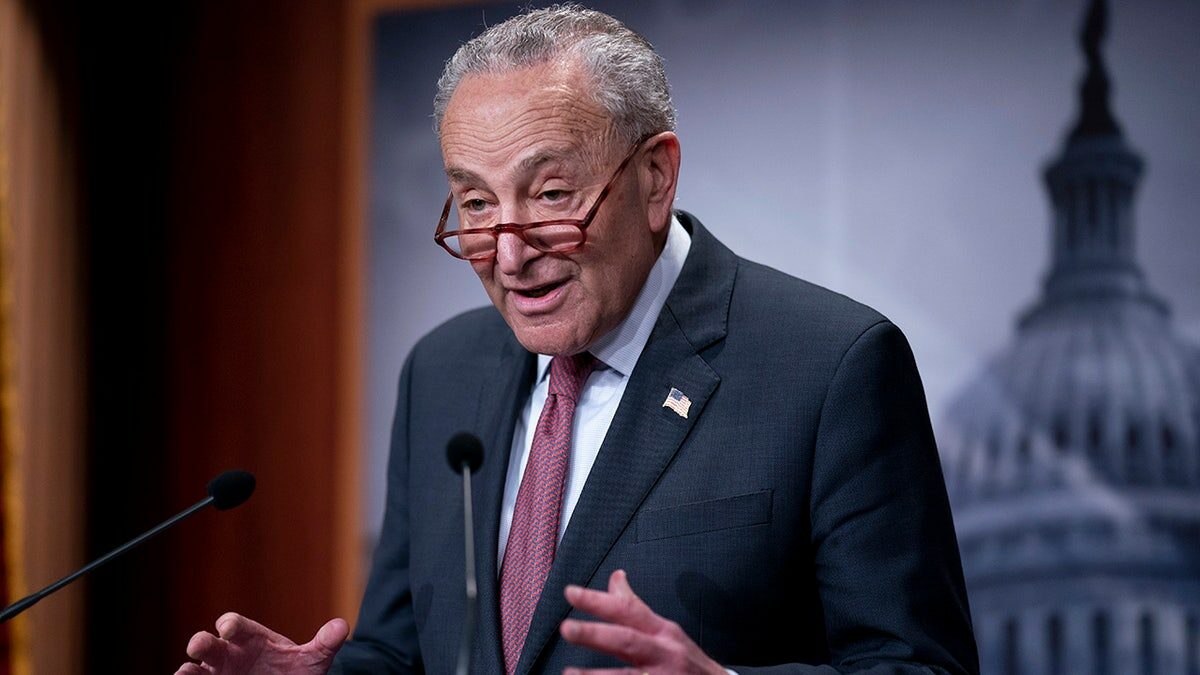
The government has shut down… again. Try to contain your alarm.
This time, Senate Democrat Chuck Schumer and his colleagues have decided that the price of reopening it is the restructuring, if not outright weakening, of Immigration and Customs Enforcement. It is, apparently, an urgent national priority. Last time it was something else. Next time, perhaps it will be something equally creative. With modern Democrats, the justification changes. The objective does not.
Schumer has produced a list of demands, including requiring ICE agents to obtain judicial warrants before conducting certain operations and then restricting their use of face coverings. On paper, this may sound like procedural reform. In practice, it means asking federal agents to seek permission from the very jurisdictions that have declared themselves unwilling to cooperate with federal immigration enforcement. Sanctuary cities did not earn that title by accident.
Schumer claims Americans are tired of masked agents conducting warrantless operations in their communities. He calls it secrecy. He calls it chaos.
As an American, I am not tired of law enforcement. I am, however, quite tired of Schumer presuming to speak for the rest of us.
More importantly, I suspect millions of Americans call it exactly what it is – enforcement of the law – though they are rarely consulted when such declarations are made on their behalf.
During the Biden administration, the southern border experienced one of the largest illegal migration surges in the nation’s history. Millions entered the country unlawfully. Cities struggled to absorb them. Public resources were strained. Local and state governments are now requesting federal assistance to manage the consequences.
Now, as enforcement efforts attempt to address that reality, Democrats object once again – this time to the enforcement itself.
In Minneapolis, city officials claimed enormous economic losses tied to ICE enforcement operations and sought federal relief. The implication was difficult to miss: enforcing immigration law had become, in their view, a financial burden rather than a legal necessity. The cost of enforcement, apparently, was more troubling than the cost of ignoring the law in the first place.
Meanwhile, on the international stage, California Governor Gavin Newsom attended the Munich Security Conference and openly criticized the President and his policies before foreign leaders. Whatever one thinks of those policies, it was a notable display – an American governor, abroad, criticizing American leadership while representing no national authority beyond his own political ambitions. Once, political disagreements were argued at home. Evidently, they are now exported.
None of this is illegal. But it is revealing.
It reveals a political movement more comfortable challenging American authority than exercising it. Enforcement is described as cruelty. Sovereignty is described as intolerance. Obstruction is described as principle.
Government shutdowns are often portrayed as emergencies. In reality, they are leverage. They are used not to solve problems, but to force concessions that could not be achieved through legislation alone.
The law itself has not changed. Only the willingness to enforce it has.
Shutdowns will end. Funding will resume. Statements will be issued, and attention will shift elsewhere.
With midterm elections approaching, voters will soon decide whether this approach to governance should continue. Shutdowns, law enforcement, and national sovereignty will not be debated in abstract terms but judged by results. Is immigration law something to be enforced, or something to be negotiated away depending on who holds power? That is a precarious way to govern a nation.
The answer will not come from Washington press conferences. It will come, eventually, from the country itself.
One hopes the country is paying attention.