


AMERICA REJECTS KINGS – UNTIL IT DOESN’T
AMERICA REJECTS KINGS – UNTIL IT DOESN’T
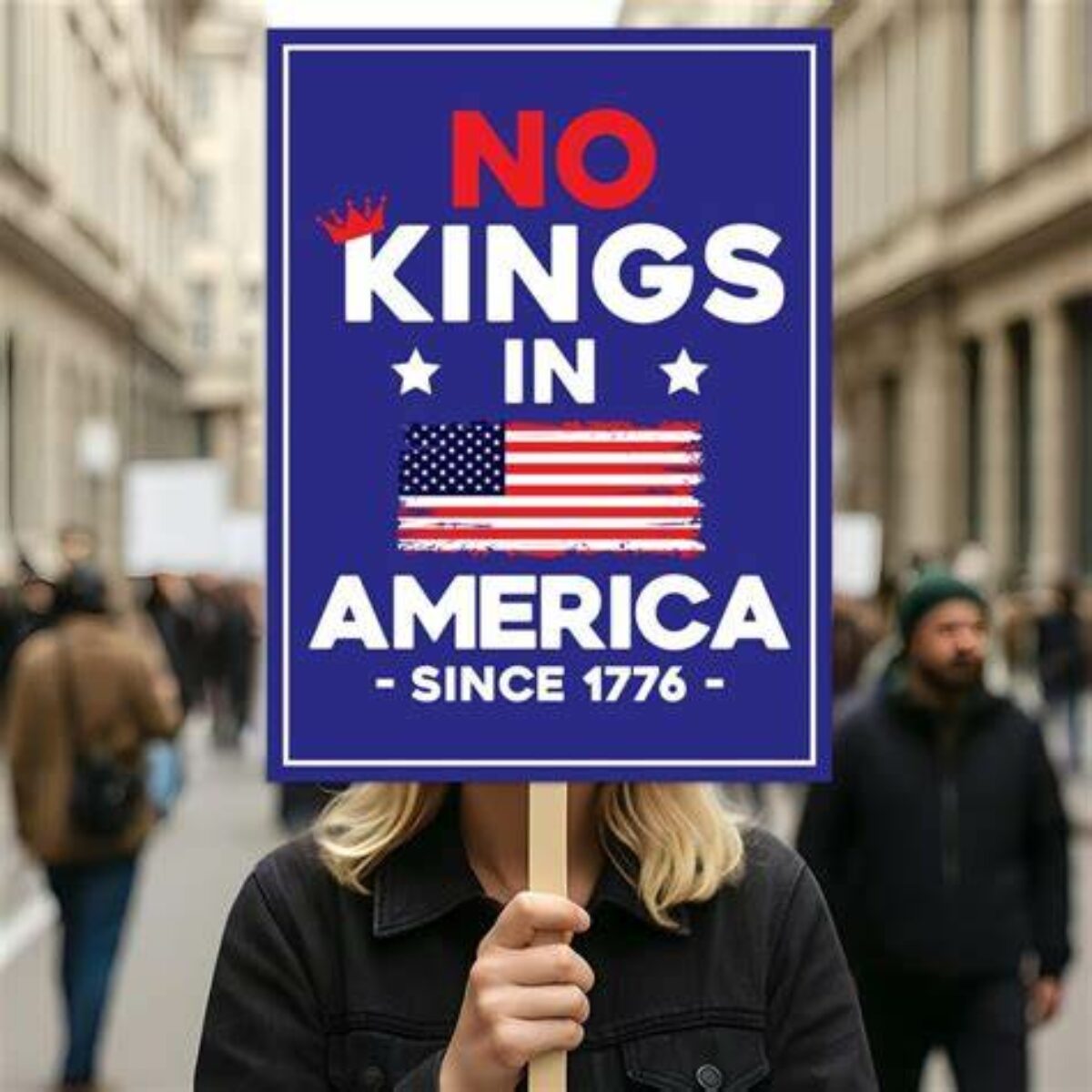
What is it about Donald Trump that sets liberals’ hair on fire? And why is it that the mainstream media is all too eager to supply the matches – especially in an age where we are told there are “no kings”?
Consider some of the recent headlines surrounding the “No Kings” protests this past March:
CBS News – “Millions turn out for ‘No Kings’ rallies held worldwide to protest against Trump.”
CNBC – “Anti-Trump rallies pop up in thousands of U.S. cities for ‘No Kings’ protest.”
Yahoo News – “‘No Kings’ protests recap: More than 8 million turned out across all 50 states, organizers say.”
The list goes on. The actual number of protesters was far lower than what was reported, but in a way that misses the point. The story-line is consistent and the amplification instant. In today’s media environment, outrage is encouraged.
There’s no doubt that Trump does not conduct himself the way past presidents have. But that raises the question of how well has the traditional approach actually served us?
For decades, we’ve watched polished politicians reign over a system defined by gridlock. Congress stalls, compromises dissolve, and the only outcome seems to be spending more of the public’s money. The result is a political class that speaks carefully, promises broadly, and delivers selectively, at times behaving more like a ruling class than a representative one.
Trump breaks from that mold. He’s brash, speaks bluntly and sometimes crudely. Where past presidents chose their words with surgical precision, Trump chooses impact over elegance. His critics see recklessness. His supporters see authenticity.
What upsets his opponents is not simply what he says, but the fact that he says it without wrapping paper. He doesn’t speak the polished dialect of Washington, where bad ideas are softened by careful phrasing and failure is disguised as process. Trump’s language is direct, and in an age built on understatement, directness feels more threatening than dishonesty.
But if frankness is the standard for disqualification, then history becomes awkward. Trump is, at best, a minor-leaguer when it comes to the expansion of presidential power.
Consider Franklin Roosevelt. His New Deal reshaped the federal government, dramatically bloating its size and scope. He attempted to pack the Supreme Court to secure favorable rulings and exercised unprecedented authority during World War II. Roosevelt established an expectation that the president drives national policy.
Or George W. Bush, who expanded executive authority in the name of national security following 9/11. His expansion was widely accepted at the time amid patriotic unity, bumper stickers, and fear. Much of that fear was encouraged and magnified by the media.
Under Obama, executive action became a tool for advancing policy when Congress stalled, particularly on immigration and climate policy boondoggles. His presidency coincided with a period of increasing tension around race, despite early hopes that his election might mark a turning point. Whether fairly or not, many Americans came away feeling that the country had become more divided rather than less.
Then came Biden, whose repeated attempts at student loan forgiveness and broad regulatory actions continued that trajectory.
And what is more kingly than pardoning one’s own family?
Even Abraham Lincoln, arguably the greatest president in American history, expanded executive power by suspending habeas corpus and broadening war powers during the Civil War. Those actions were probably justified, but they highlight a truth – presidential power has always expanded under pressure.
The presidency has been expanding for more than 150 years. Trump is not an outlier in that trend; he is simply its most controversial participant, arriving at a time when congressional dysfunction is the norm rather than the exception.
If Americans truly reject the idea of kings, why has the accumulation of power in the presidency been so consistently tolerated. So why the intensity of the reaction around Trump?
Part is policy. Much is personality. But a significant part of it is media amplification. In a media driven by attention, conflict is their currency. Trump generates conflict effortlessly and the media distributes it relentlessly. The result is a feedback loop in which provocation and outrage feed each other.
Perhaps the more useful exercise is not to react reflexively, but to evaluate thoughtfully. Strip away the tone, ignore the headlines for a moment, and ask the question: what specifically has worked, and what has not?
That kind of assessment may not generate clicks, but it might generate clarity, something far more valuable.
America claims to reject kings, but repeatedly empowers them, selectively deciding when to object.