


A STATE OF THE UNION FOR THE AGES
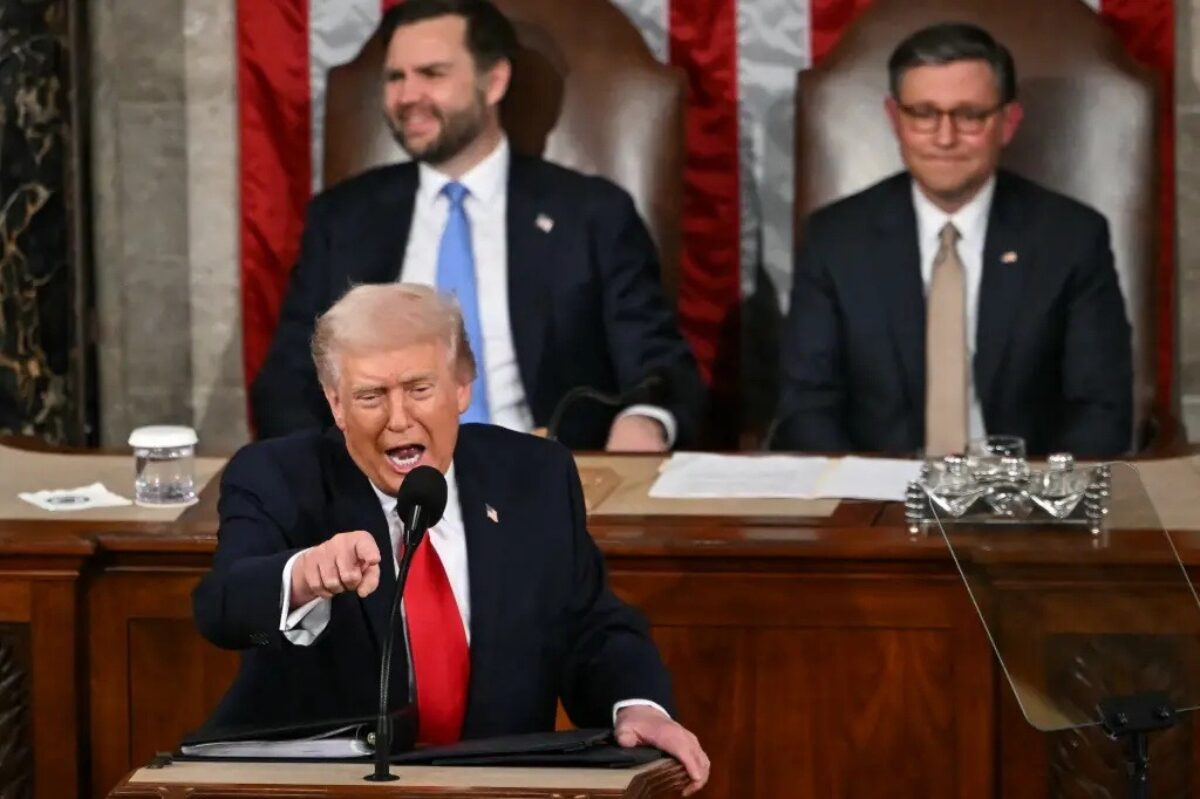
I haven’t written much about President Trump in a while in my commentaries, focusing instead on other pressing issues and subjects. But after watching the State of the Union address last Tuesday, I am compelled to write about him again.
In what could only be called a brilliant speech, albeit a long one, the president struck gold with his words, alternating between patriotic moments and sharp contrasts with the Democratic Party’s record and priorities. Yes, his usual bombast was present, but if one looks beyond the bluster and instead considers the substance of the message, it was truly a powerful and potentially historic address.
Yes, the prices of groceries, medicine, and insurance rates are still too high, but that is a problem Trump inherited and, to be fair, he’s only been in office a year. These markets are cyclical in nature and rarely shift overnight. At some point, they will stabilize during the Trump presidency, of that I have little doubt.
The imagery during the speech was powerful and moving. And I’m not talking about looking at Melania either. Bringing out the U.S. Men’s gold-medal hockey team and awarding goalie Connor Hellebuyck the Presidential Medal of Freedom was awe-inspiring. Hellebuyck earned that medal; it was he who lifted that team with his performance over a Canadian squad that, to my eye, looked faster and stronger. America needed that win.
He then proceeded to award various medals to members of our military who personify America’s dominance and resolve on the world stage. Presenting those honors in real time, on a public stage, was striking, and should have left Americans with a renewed sense of pride.
Also present were victims of crimes committed by individuals who entered the country illegally. Trump was deliberate in including them, reinforcing his long-standing position that border security failures carry human consequences. The families deserved to be heard. Trump reminded America that in the past nine months zero illegal immigrants have been admitted to the U.S. and that fentanyl crossings are reportedly down 56% in the first year. He also referenced billions of dollars in suspected fraud within government programs in Minnesota and elsewhere, a topic that warrants continued scrutiny.
What was equally striking in that hall, however, was the visible divide within Congress. Seventy-three members chose not to attend the State of the Union, an extraordinary number in modern political history.
Texas Representative Al Green once again found himself removed from the chamber after interrupting the proceedings. His conduct, in my view, appeared more theatrical than substantive, a moment that overshadowed whatever point he intended to make.
Trump called for Congress to pass a ban on insider trading by lawmakers, a proposal that has bipartisan public support but has struggled legislatively. Reaction from Democrats was muted. It was particularly pointed when Trump asked whether former Speaker Nancy Pelosi was present, a clear reference to ongoing criticism surrounding congressional stock trading practices.
As for members of “The Squad,” those who attended, protested portions of the speech and wore buttons expressing opposition to ICE. The visual impression was one of protest rather than engagement.
Many Democrats who remained in attendance sat largely stone-faced through much of the address. When Trump asked lawmakers to stand if they believed in the “fundamental principle” that “the first duty of the American government is to protect American citizens, not illegal aliens,” many stayed seated. Trump responded sharply, suggesting they should be ashamed. The optics of that exchange will not likely age well — particularly with midterm elections on the horizon.
But beyond the applause lines and political grandstanding, this State of the Union will likely be remembered for something larger: clarity. Clarity of contrast. Clarity of priorities. And, sadly, clarity of division.
But beyond the applause lines and political grandstanding, this State of the Union will likely be remembered for something larger: clarity. Clarity of contrast. Clarity of priorities. And, sadly, clarity of division.
Supporters saw strength and direction. Critics saw provocation. What went unmentioned was this: no one in that chamber was indifferent.
In an era when many speeches blur together and fade, this one did not. And in modern politics, that alone makes it consequential.