


WASHINGTON’S FAVORITE TRICK – WRITE THE LAWS, THEN BLAME THE ENFORCERS
More than 40 years ago, columnist Charley Reese wrote a blunt observation about American politics:
“Politicians are the only people in the world who create problems and then campaign against them.”
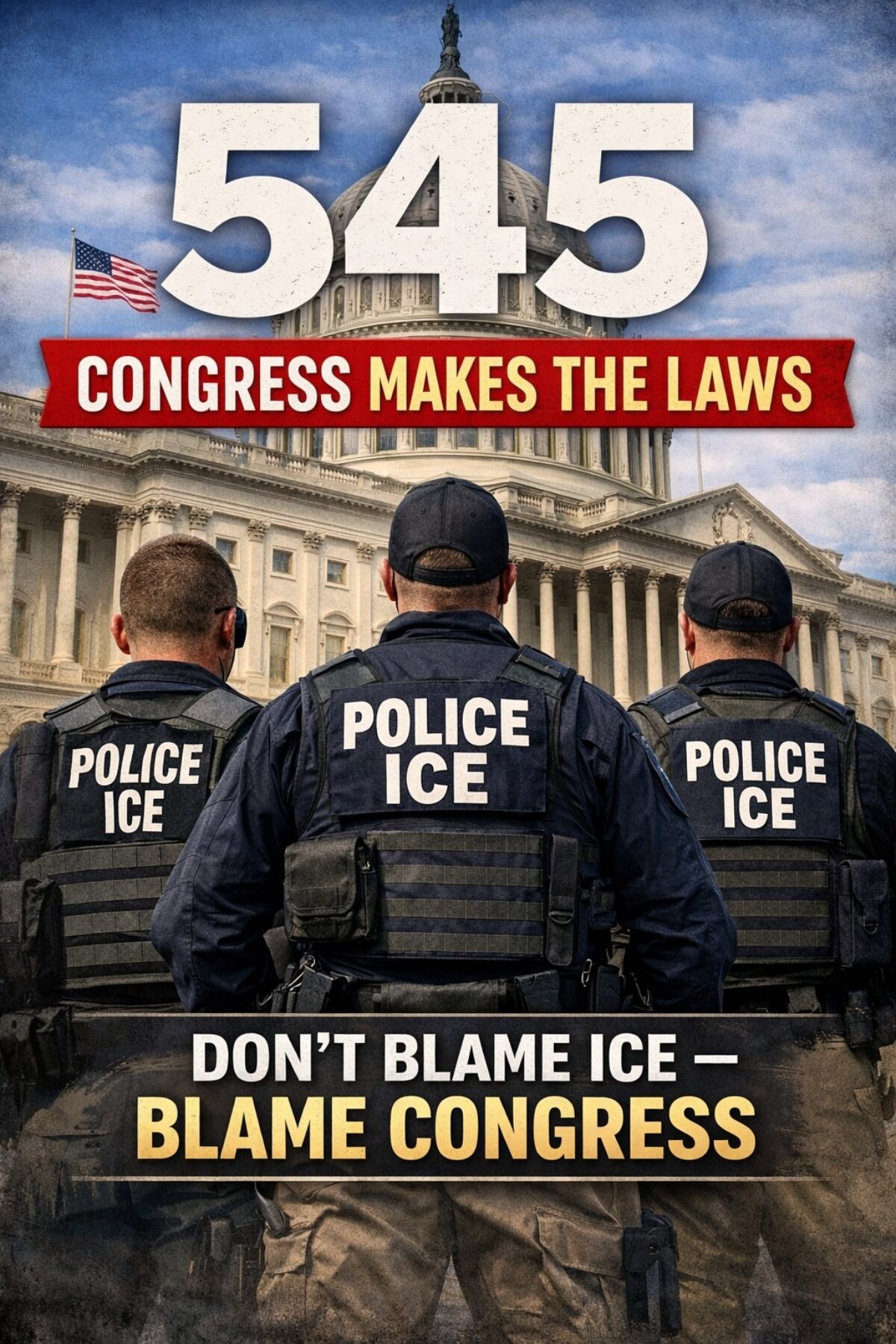
545 people
That line still rings true today.
Washington debates everything, inflation, spending, border security, immigration enforcement, yet somehow the same problems keep getting worse. Politicians hold press conferences, blame the other party, and promise reforms. But the reality of how our government works hasn’t changed.
As Reese pointed out decades ago, the power of the federal government ultimately rests in the hands of a small group of people:
“One hundred senators, 435 congressmen, one president and nine Supreme Court justices. 545 human beings are directly, legally, morally and individually responsible for the domestic problems that plague this country.” — Charley Reese
545people
Those numbers haven’t changed. The population has grown to more than 330 million, but the same 545 people still make the decisions that shape our country.
And that includes immigration law.
Congress Wrote the Immigration Laws
There’s a growing trend in American politics to direct anger toward Immigration and Customs Enforcement, ICE, over immigration enforcement.
But here’s a basic fact that gets lost in the shouting: ICE doesn’t write immigration laws. Congress does.
Federal immigration enforcement powers come from statutes passed by Congress, primarily the Immigration and Nationality Act, which authorizes immigration officers to detain and arrest individuals suspected of violating immigration law.
Congress also created ICE through the Homeland Security Act of 2002, placing it under the Department of Homeland Security and assigning it the job of enforcing federal immigration law.
In other words, ICE agents are not making immigration policy. They are enforcing the policy written by lawmakers.
Don’t Blame the Referees
That distinction matters.
If Americans believe immigration enforcement is too strict, too lenient, or poorly designed, the target of that criticism should be the people who wrote the rules, Congress.
Taking it out on individual ICE agents makes about as much sense as yelling at a referee for enforcing the rules of a game.
The laws they enforce were debated, written, and voted on by elected officials in Washington.
If voters want those laws changed, there is a constitutional path to do it: elect different representatives or demand that current ones rewrite the statutes.
Washington’s Favorite Trick
Reese warned about another political habit that still thrives today, shifting responsibility.
“Those 545 human beings spend much of their energy convincing you that what they did is not their fault.” — Charley Reese
In modern Washington, the blame game is constant.
Democrats blame Republicans.
Republicans blame Democrats.
Both blame bureaucrats, the economy, or global events.
Meanwhile, Congress continues passing spending bills, funding agencies, and writing laws that shape everything from taxes to immigration enforcement.
The system works exactly the way the people in charge allow it to work.
Accountability Still Matters
Reese’s larger point remains relevant today. When citizens understand who actually holds power in the federal government, accountability becomes unavoidable.
If the tax code is unfair, Congress wrote it.
If spending explodes, Congress approved it.
If immigration enforcement policies exist, Congress authorized them.
That doesn’t mean every policy is perfect or beyond criticism. In fact, healthy debate about immigration law is part of a functioning democracy. Or at least it used to be.
But that debate should be directed at the people responsible for writing the laws, not the agents enforcing them.
The Real Question
In the end, Reese argued that the American people are still the ultimate bosses of the federal government.
“Those 545 people and they alone have the power. They and they alone should be held accountable by the people who are their bosses.” — Charley Reese
The question for voters today is simple.
If Americans don’t like the results coming out of Washington, whether it’s spending, taxes, or immigration policy, are they willing to hold those 545 people accountable?
Because until that happens, the cycle Reese described decades ago will continue: politicians creating problems, then campaigning against the problems they created.