


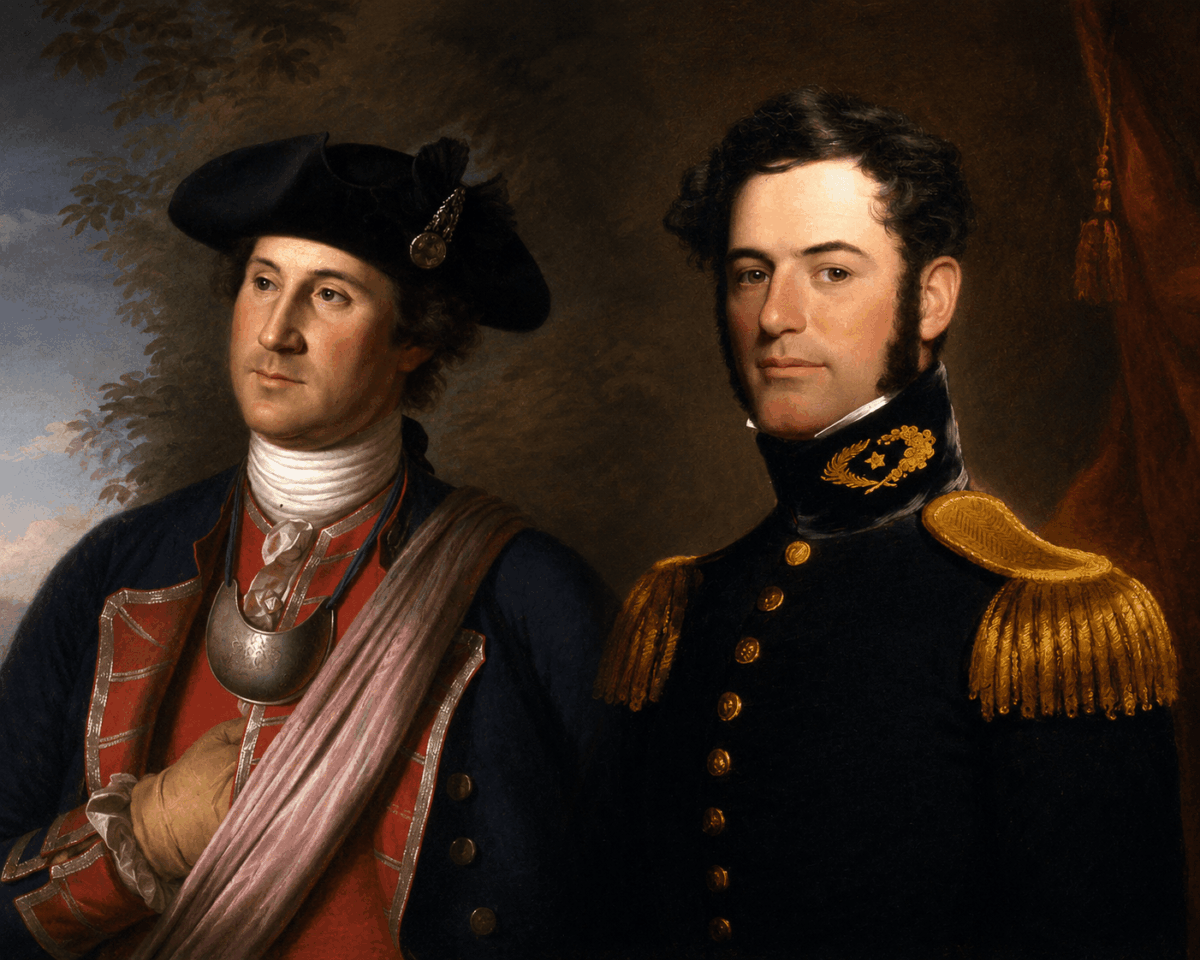
TWO VIRGINIANS. TWO ARMIES. TWO DIFFERENT LEGACIES
History remembers Robert E. Lee as the commanding general of the Army of Northern Virginia. Over the past twenty-five years, several Lee statues have been removed as communities across the country reassessed his legacy in light of his service to the Confederacy.
Yet for more than thirty years before the Civil War, Lee wore the uniform of the US Army with distinction. He was a hero of the Mexican-American War, earning multiple promotions for gallantry in combat. Winfield Scott, one of the most influential commanders in American history, praised him, stating Lee was “the very best soldier that I ever saw in the field.” After that war, Lee became the superintendent of the US Military Academy at West Point.
Consider that before Virginia seceded, President Lincoln wanted Lee to command the Union Army. Lee agonized over his decision for days before ultimately declining, believing his loyalty belonged to Virginia, a sentiment that was not uncommon then. Lee came to the conclusion that he could not lead an army against his own state.
Unfortunately, much of his history has been forgotten as Americans increasingly define Lee by the four years he spent leading the Confederacy rather than the thirty-two years that came before them or the five years that followed. After the Civil War he devoted the remainder of his life to education and reconciliation as the president of Washington College.
Perhaps it’s time we revisit the knee-jerk rush to judgment surrounding General Lee, a man whose military achievements helped shape American history long before the Civil War divided the nation.
This commentary is in no way intended to excuse the Confederacy or defend the institution of slavery. Secession was a disastrous mistake that needlessly cost hundreds of thousands of American lives. The question before us is simpler: Should an entire lifetime be judged solely by its most controversial chapter?
Perhaps we should look at the service record of another American General, George Washington. The comparison between Lee and Washington has been debated for over a century. Both men were Virginians. Both resigned commissions in the armies they had faithfully served. In the eighteenth century many people identified first with their colony (state) over the country.
Washington spent five years serving the British Crown as an officer in Virginia’s colonial militia before leading the fight for American independence. When Washington traded sides, he thought he was fighting to create a new nation independent of Britain. When Lee joined the Confederacy, he believed he was defending the newly formed Confederacy and the sovereignty of his home state against what many Southerners viewed as an increasingly overreaching federal government.
Both men believed firmly that their highest political loyalty belonged to Virginia first and foremost. Both resigned commissions in armies they served. Both then fought against those governments because they believed they were defending the rights of their people.
Washington led an army that was often on the verge of collapsing. Often, soldiers had no shoes, little food, and went months without being paid. Lee’s army was frequently and heavily outnumbered, yet he won battles against superior forces.
It should also be noted that Lee was never tried for treason.
History remembers Washington as the Father of His Country and Lee as a rebel against it. Yet both men were Virginians who resigned commissions in the armies they had sworn to serve because they believed a higher loyalty called them elsewhere. Whether one agrees with either decision, the comparison forces us to wrestle with a timeless question: When loyalties collide, what comes first – your nation, your state, or your conscience?
History is often kinder to the victors than to the conquered. Had Cornwallis won at Yorktown, schoolchildren might be taught that Washington was history’s greatest traitor. Instead, they learn he was history’s greatest patriot. That doesn’t mean Washington and Lee were morally equivalent, but it does remind us that history is shaped not only by the choices men make, but also by the outcomes of those choices.
So, are we going to judge Lee by a short chapter in his life? If the answer is yes, there are probably quite a few college students hoping the rest of us never find out what happened during their freshman year.
Perhaps Robert E. Lee deserves neither blind reverence nor blanket condemnation. Like every figure who shaped our nation’s history, he deserves something rarer in modern America: to be remembered in full.