


A TRILLION DOLLARS
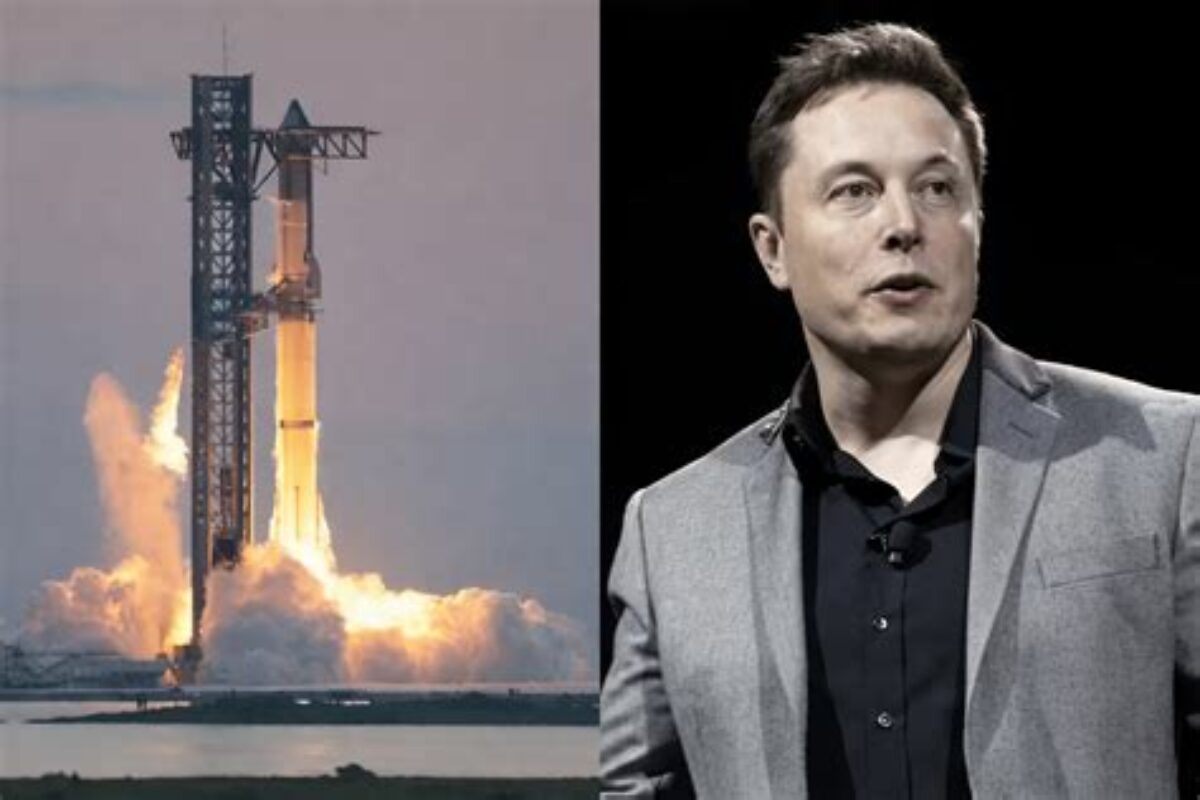
Congratulations to Elon Musk, the world’s first trillionaire.
Born in South Africa before immigrating to Canada and eventually the United States, Musk crossed a financial threshold that would have seemed unimaginable just a generation ago. His rise to trillionaire status came after SpaceX began trading publicly, sending the value of his holdings soaring.
The numbers are almost impossible to comprehend. A trillion dollars is one million million dollars. If you spent one million dollars every hour of every day, it would take more than a century to spend a trillion.
Yet what interests me more than the money is the mission.
According to its prospectus, SpaceX exists:
“To build the systems and technologies necessary to make life multi-planetary, to understand the true nature of the universe, and to extend the light of consciousness to the stars.”
Think about that for a moment. Most companies seek to sell products, increase market share, or maximize profits. SpaceX is openly talking about establishing a lunar economy, transporting people and cargo to the Moon and Mars, and ultimately expanding human civilization beyond Earth.
It’s a lofty goal.
Then again, so was landing on the Moon. So was building the transcontinental railroad. So was creating the Internet. History has a funny way of rewarding people who attempt things others consider impossible.
Predictably, the usual critics emerged. Bernie Sanders and Elizabeth Warren wasted little time expressing concern that one man could accumulate so much wealth.
In full disclosure, I – a stout defender of conservatism and capitalism – initially wondered about it, but I didn’t shoot my mouth off until I saw more facts. I briefly thought how half of that money could go a long way toward shoring up Social Security, Medicare, or even the nation’s infrastructure. But in the end, I would much rather have Musk holding that money than any group of politicians who would take $500 billion and turn it into another trillion dollars of debt through their special interests.
What the critics rarely acknowledge is how that wealth was created.
Musk didn’t inherit SpaceX. He built it. Thousands of engineers, technicians, and employees helped build it as well. More than 4,000 of them reportedly became millionaires through company stock ownership.
That’s the part critics often overlook. Wealth is not always a pie cut into smaller and smaller slices. Sometimes wealth is created where none existed before. SpaceX didn’t merely make Elon Musk richer. It created thousands of high-paying jobs, advanced American aerospace technology, expanded satellite communications around the globe, and generated fortunes for thousands of ordinary employees who took a chance on the company.
That’s often forgotten when discussing entrepreneurship, something that Sanders and Warren know nothing about. Great fortunes are rarely created in isolation. Successful companies tend to create wealth for investors, employees, suppliers, and communities along the way.
To put Musk’s wealth in perspective, only a handful of nations have economies larger than his estimated net worth. His fortune exceeds the annual economic output of countries such as Ireland, Singapore, Sweden, and even his native South Africa.
More astonishing still, the combined fortunes of the four wealthiest individuals under him fall just short of Musk’s holdings.
Whether one admires him or not, Musk represents something uniquely American.
A man born thousands of miles away came to the United States, built electric cars, reusable rockets, satellite communications networks, artificial intelligence companies, and one of the most valuable private enterprises in history. Along the way, he became the richest person who has ever lived. The money is remarkable. The ambition is even more remarkable.
America remains one of the few places on earth where an immigrant can arrive with almost nothing and end up trying to put mankind on another planet.