


A CLOSE CALL WITH ARMAGEDDON?
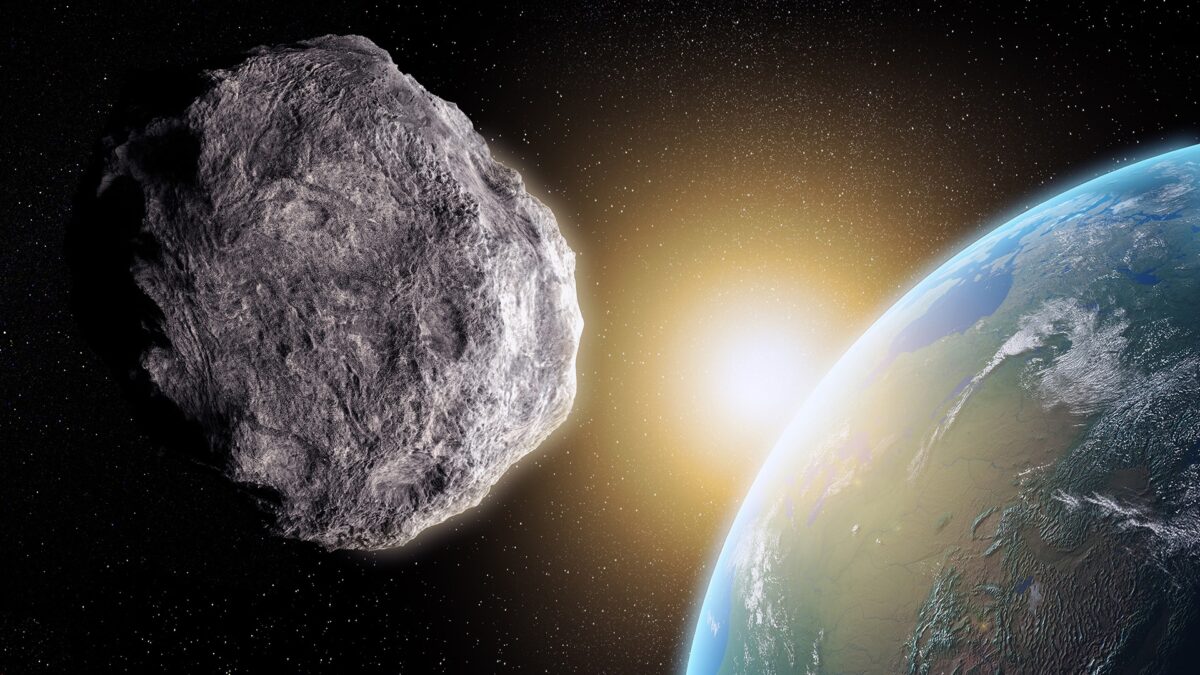
If you are reading this, it means Earth survived the latest asteroid that zipped past Earth last Monday.
The object was estimated to be about sixty-two feet wide and came within roughly 57,000 miles of Earth. To put that into perspective, the Moon sits about 239,000 miles away.
Most troubling – assuming we all didn’t perish and this commentary somehow survived floating through space – is that astronomers with the Mount Lemmon Survey in Arizona did not discover the asteroid until May 10th.
Which reminds me of the classic line from the movie Armageddon where Rockhound, played by Steve Buscemi, points out they’re trying to save Earth while sitting on millions of pounds of fuel, a nuclear weapon, and machinery all built by the lowest bidder.
I don’t know about you, but I thought we had a slightly better handle on these things by now.
Scientists claim it is rare for an object that size to come that close to Earth, though not unprecedented. Evidently, smaller asteroids pass near us fairly often.
According to Wikipedia, an asteroid is a minor planet larger than a meteoroid orbiting within our solar system. Unlike comets, they don’t have tails. They can be rocky, metallic, or icy in composition.
One asteroid, Ceres, is considered a dwarf planet and measures nearly 3.3 million feet in diameter. Of the estimated one million asteroids in our solar system, most are located in the asteroid belt between Mars and Jupiter. The majority follow elliptical orbits and take roughly three to six years to circle the Sun.
In recent history, the largest space rock to sneak up on us was the Chelyabinsk meteor that exploded over Russia in 2013. Nobody saw it coming.
It “only” released about thirty times more energy than the atomic bomb dropped on Hiroshima. Nobody died, though nearly 1,500 people sought medical treatment afterward. The meteor was estimated to weigh more than 24 million pounds despite being only fifty-nine feet wide.
Apparently, asteroids favor Russia.
Back in 1908, another object exploded over Siberia near the Tunguska River. The blast flattened trees across approximately 830 square miles and is believed to have exploded about five miles above Earth, leaving no crater behind. It remains the largest recorded impact event in modern human history.
And if none of that concerns you, take comfort in knowing a much bigger one is coming.
An asteroid known as 99942 Apophis – estimated at roughly 1,200 feet wide – is expected to pass within about 20,000 miles of Earth on April 13, 2029.
Yes, that’s a Friday.
Scientists currently believe Apophis will safely miss Earth, which feels a little like hearing someone say, “Hold my beer and watch this.”
An asteroid that size could weigh somewhere in the neighborhood of 204 billion pounds, depending on composition and density. It is also expected to truck on by us at somewhere between 25,000 and 45,000 miles per hour.
An impact from an object that size would not wipe out all life on Earth like the dinosaur asteroid did, but it could absolutely devastate an entire region or a small country or trigger catastrophic tsunamis if it struck an ocean.
The asteroid believed responsible for the extinction of the dinosaurs 66 million years ago was vastly larger, estimated at roughly six to nine miles wide. Scientists believe it struck in the Yucatan Peninsula in modern-day Mexico, creating the Chicxulub crater. The energy released is thought to have equaled billions of nuclear bombs.
It caused massive earthquakes, firestorms, and tsunamis thousands of feet high. Dust clouds blocked sunlight across the globe. Scientists estimate the event wiped out approximately 75% of all species on Earth, meaning somehow cockroaches looked around afterwards and decided conditions were still acceptable.
According to my research, several smaller asteroids pass between Earth and the Moon every month. The Moon itself is covered in craters from asteroid impacts. Earth has likely been struck even more often, but erosion, weather, oceans, and tectonic activity do a much better job of hiding the evidence.
Even more comforting: car-sized asteroids pass by Earth frequently and often go completely unnoticed until after they are gone.
Sleep peacefully tonight, my friends.