


‘NO KINGS” AND THE MISUNDERSTANDING OF POWER IN AMERICA
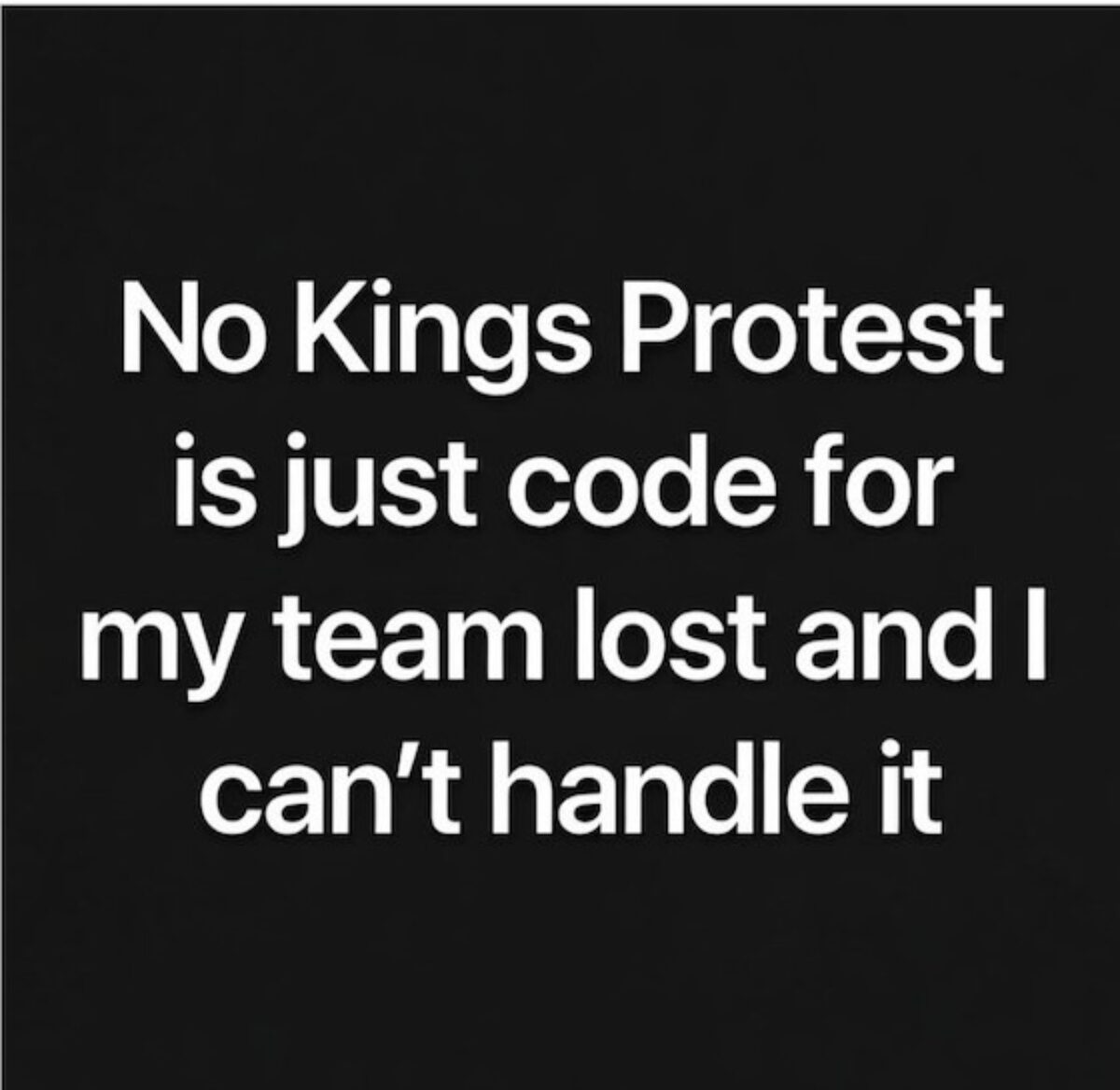
If you found yourself standing in a crowd holding a “No Kings” sign and believing you were defending democracy, it’s worth pausing to reflect on what that actually means.
The United States is not a monarchy. It is a constitutional republic, built on elections, term limits, and a free press. For years, the media openly criticized and even labeled a sitting president a “fascist,” yet no journalists were arrested, silenced, or imprisoned. That alone should give us perspective on what true authoritarianism looks like, and what it does not.
Today, however, the word “fascism” is used so broadly that it risks losing meaning altogether. In some circles, basic positions, such as enforcing national borders, promoting civic identity, or supporting parental involvement in education are labeled as extremist. Yet these ideas are not unique to any one ideology; they are standard practices in most countries around the world.
For example:
- Every sovereign nation enforces its borders
- A majority of countries require some form of identification to vote
- Civic identity and national pride are common across cultures
These are not radical concepts. They are foundational elements of nationhood.
A Question of Power, Not Just Principle
Much of the frustration in modern politics stems from a deeper issue: a disconnect between public dissatisfaction and political outcomes.
Congress consistently holds low approval ratings, yet incumbents are re-elected at extraordinarily high rates. Many elected officials have held office for decades, raising legitimate concerns about institutional longevity and accountability across both parties. I believe it is well past time for term limits. I also believe the question of term limits should be voted on by the public, not Congress. Same can be said for congressional raises, benefits, etc.
This raises an important question:
If the system is so widely disliked, why does it so rarely change?
Consistency in Standards
Another concern often raised is the perceived inconsistency in how policies and principles are applied.
During the COVID-19 pandemic, Americans were required to present documentation to participate in everyday activities such as dining or travel. Yet debates over voter identification, something required in many other democracies, are framed very differently. I can only think of one reason to be against voter ID and for unlimited mail in ballots. And you spell that reason, C H E A T.
Similarly, discussions around free speech, censorship, and the role of technology platforms have intensified. Government interaction with private companies, particularly in moderating information, has raised broader questions about transparency, accountability, and the limits of influence.
Defining What Democracy Means
At its core, democracy depends on:
- Transparent elections
- Open debate
- Equal application of laws
- Accountability for those in power
When these principles are perceived to be applied unevenly, trust begins to erode, regardless of political affiliation.
Public reaction to events, whether protests, riots, or political investigations, has also highlighted divisions in how justice and accountability are understood. For many, the issue is not simply what happened, but how differently similar situations are treated.
The Role of Citizens
Ultimately, political movements, on any side, depend on the participation of ordinary citizens. But participation should also include critical thinking.
Before adopting slogans or narratives, it’s worth asking:
- What systems are actually in place?
- Who holds power, and how is it exercised?
- Are principles being applied consistently?
Disagreement is not a threat to democracy. It is a necessary part of it. But clarity matters. Definitions matter. And understanding the structure of our government matters.
Final Thought
Rejecting authoritarianism is something most Americans agree on. The challenge is recognizing what it actually looks like and what it does not.
In a country with elections, competing parties, and a free press, the conversation should not be about kings. It should be about accountability, transparency, and ensuring that the systems we rely on function as intended for everyone.