

THE MANUSCRIPT WAS THE EASY PART
You say you just finished your manuscript — surely a bestseller? You spent months, maybe years, writing it, and are already imagining the blockbuster movie adaptation. Your mind probably wanders toward mountains of money and standing beside some buxom blonde bombshell while accepting a Hollywood award.
Fuhgeddaboudit.
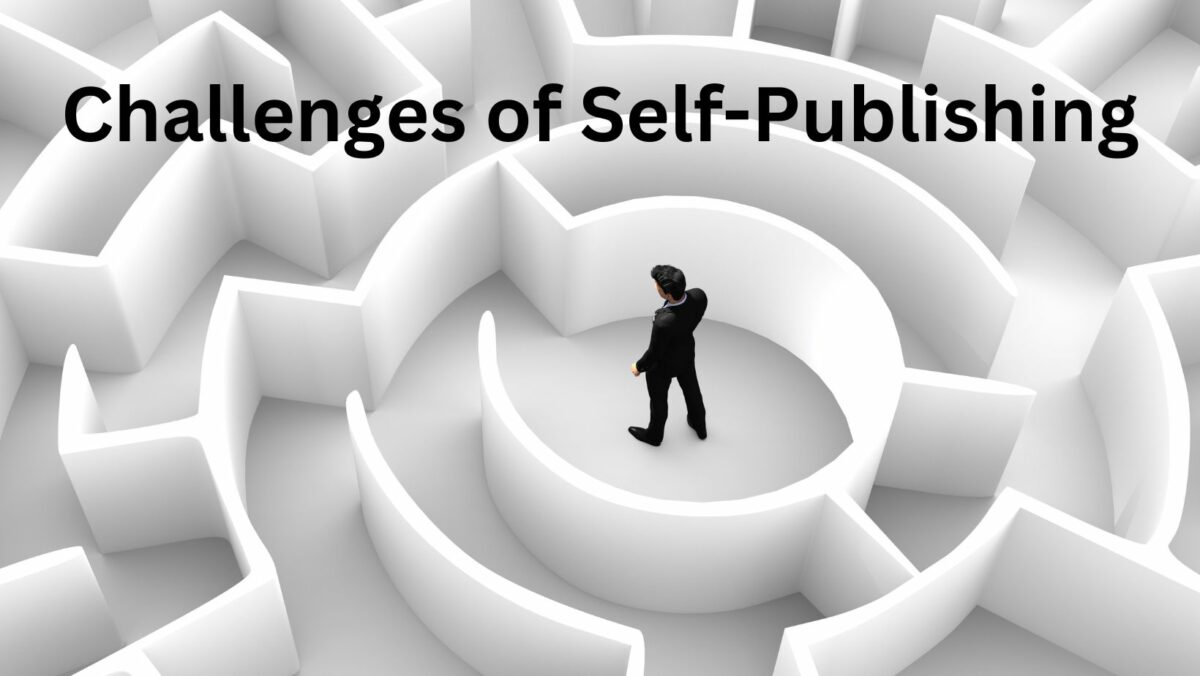
By finally finishing a manuscript that felt akin to raising another child, all that sweat equity really only bought you a trip to the starting gate — or perhaps I should say the gauntlet.
Sorry to tell you this but writing the novel was the easy part. Your adventure through hell has just begun.
Once upon a time, writers drank too much, agonized over just the right word, and mailed manuscripts to publishers. Now we optimize metadata.
Are you familiar with metadata, keywords, algorithms, newsletter funnels, Substack, Draft2Digital, virtual assistants, Amazon Books, Goodreads, and all the other modern publishing nightmares? Start boning up, because if you intend to sell that book, you’re going to need to learn them.
First comes the editing. You can pay a small fortune for someone to comb through your manuscript removing dumb mistakes — and occasionally your favorite scenes. Or you can use AI to do it for free. (That’s a tip.) But for God’s sake, don’t let AI write it. (That’s another tip.)
Now, in addition to being a novelist, you become a marketer, social media manager, branding consultant, newsletter writer, and publicist. All that remains afterward is learning TikTok, where the youth now gather to avoid reading books.
The fact is, unless your name is John Grisham, J.K. Rowling, James Patterson, or Danielle Steel, no literary agent is going to give you the time of day. Without one, you eventually drift toward self-publishing.
Good luck with that.
“Self-publishing” is actually a misnomer. There’s very little “self” about it unless you also happen to be an editor, graphic designer, computer programmer, marketing expert, and part-time psychic.
So you turn to the self-publishing industry — a viper pit filled with people more than willing to take advantage of your ego…and your checkbook.
Sadly, I speak from experience.
I currently have eleven books for sale. There’s something unsettling about seeing that many titles lined up on a dashboard, mostly because I started with one manuscript that took ten years to write.
And yet, beyond the stories themselves, I still have no idea what I’m doing most of the time.
Things became so complicated I eventually hired a virtual assistant — a young man in Pakistan.
At the moment, he’s busy uploading my books onto something called Draft2Digital, which sounds vaguely like a failed 1980s synth band but is apparently a distribution platform for independent authors.
Still, there’s something oddly satisfying about logging into D2D and staring at a full page of titles I somehow managed to write over the years.
Now if they would just sell.
But I digress into talking about me instead of your great American novel. My apologies.
The 400-pound gorilla in the industry is Amazon. If you can somehow decipher their publishing requirements and survive their algorithm, you might even sell a few books there.
Me? I apparently got banned for life from uploading directly to Amazon, though another company still manages to post my books there anyway. I don’t understand it, so don’t ask.
What I do know is this: never try changing your cover art after your book starts under-performing. That apparently sends you directly to the Amazon woodshed, where anonymous moderators from undisclosed locations gleefully erase your existence without explanation.
Still, there are endless publishing “partners” willing to help you navigate the industry — for large sacks of money.
You see the advertisements on television all the time. Companies promising to help publish your novel. Others promising to market it afterward. Here’s another tip: they usually have no better idea how to market your book than you do.
You can disregard my advice and try it anyway, and I sincerely wish you all the luck in the world. Just remember to warn your banker ahead of time about the withdrawals.
The ugly truth is this: much of the publishing industry sees aspiring authors as emotionally vulnerable people carrying checkbooks.
And most of those companies could not care less whether your novel ever sells.
Yet despite all of it — the algorithms, scams, rejection letters, marketing nonsense, and endless parade of experts wanting your credit card number — writers keep writing.
Maybe it’s ego. Maybe it’s delusion. But somewhere deep down, every writer still believes the next story might be the one.
So we keep going.
We keep inventing people who never existed and conversations nobody ever had. And we keep convincing ourselves that somebody, somewhere, might actually care enough to read what we wrote.
And every once in a while… somebody does.
Honestly, that’s probably enough to keep us hopelessly trapped in this business forever.